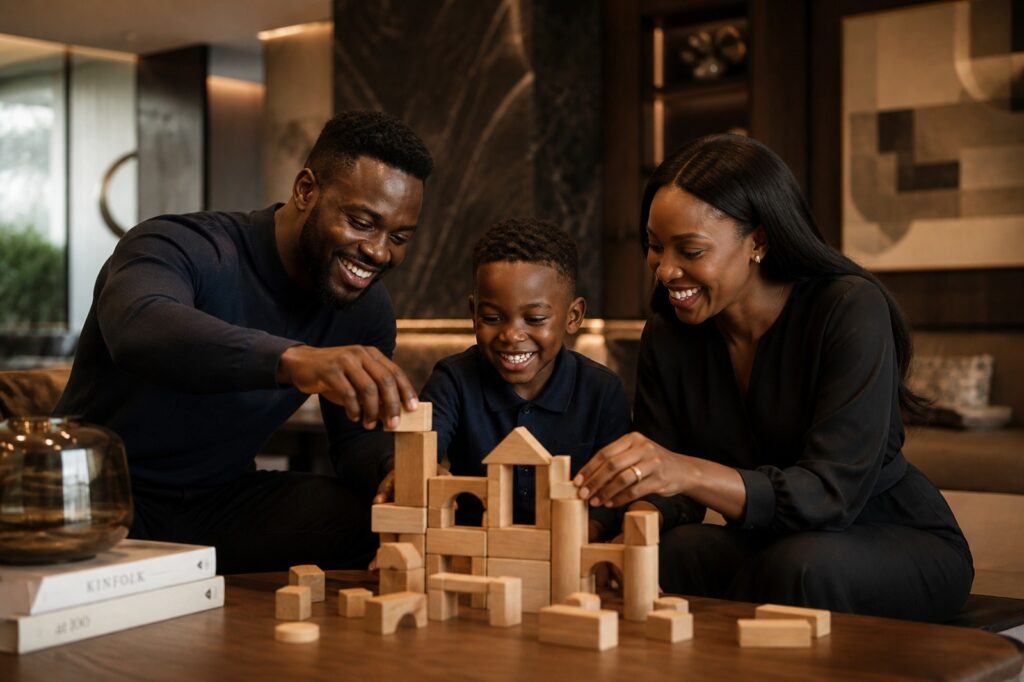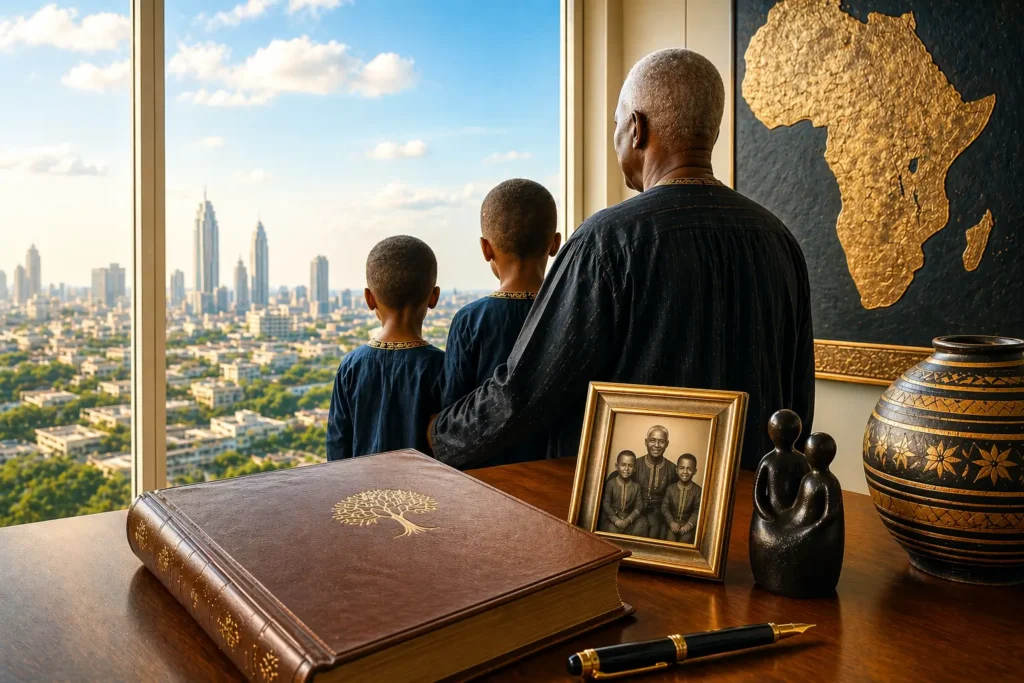
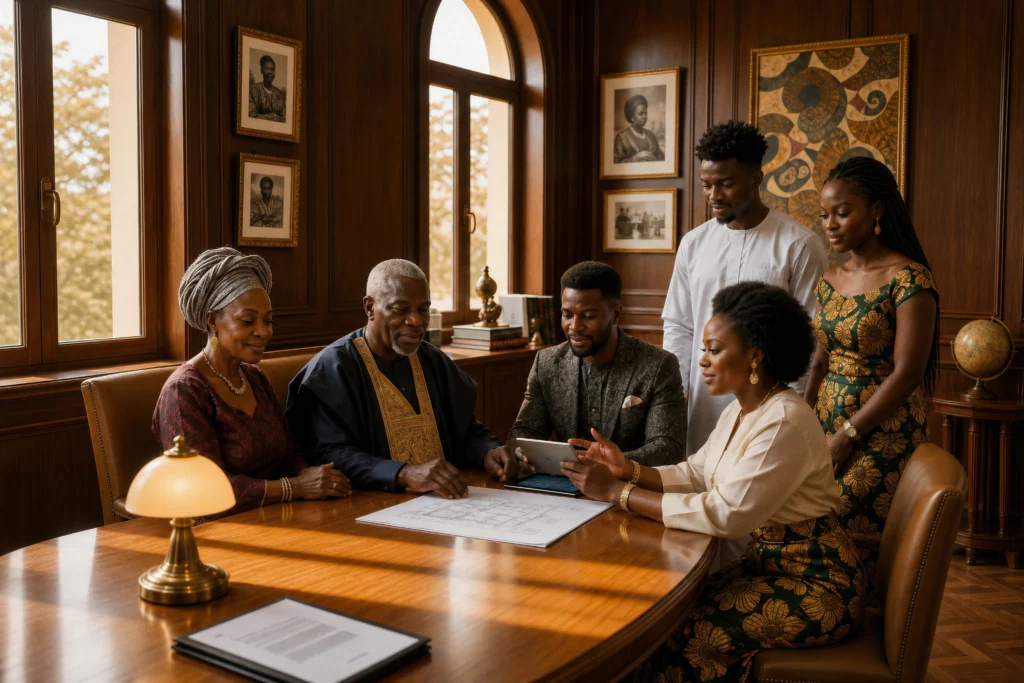
There is something about this time of year that changes the rhythm of family life.
Children who have been away at university return home for the holidays. Families finally spend time together without the usual pace of school terms, business travel and tightly packed calendars. Conversations that have been postponed for months begin to surface naturally over breakfast, during long drives or around the dinner table. For many families, summer also becomes a time to travel, visit universities, explore a second home, spend time with relatives abroad or quietly consider opportunities that have been sitting on the horizon.
These conversations rarely stay where they begin.
A discussion about a child’s education soon becomes a conversation about where the next generation may eventually build its life. A holiday property raises questions about ownership, succession and long-term investment. Exploring a new jurisdiction for business gradually opens up discussions about governance, taxation and how the family intends to operate as its interests become increasingly international.
What appears to be one decision often reveals several others waiting quietly behind it. That observation has become increasingly important to me. Perhaps this reflects a broader shift in the way successful families now operate. Their lives, businesses and investments are increasingly international, while decisions about education, ownership, investment and succession have become more interconnected than ever before. It is becoming increasingly clear that families can no longer optimise one decision in isolation without considering how it shapes the others.
In my last edition of Hauskeeping, I shared why I believe a Family Office is best understood not simply as an entity, but as a coordinated system that helps families make better decisions over time. Following that piece, this quesiton has been coming up:
What does thinking like a Family Office actually look like in practice?
The question stayed with me because I realised that the answer is rarely found in the structures themselves. It is found much earlier and begins before the decision.
Looking Beyond the Immediate Decision
Over the years, I have become less interested in the decisions families make than in the conversations that shape those decisions. Two families may ultimately arrive at exactly the same outcome, yet the thinking behind that outcome can be fundamentally different.
Consider the decision to acquire a property overseas.
The initial conversation often centres on location, lifestyle and investment potential. They are sensible questions, and every family should ask them. Yet I have found that the conversation becomes much richer when it continues beyond the transaction itself.
- How should the property be owned?
- What role is it expected to play within the family’s broader investment strategy?
- Will it serve only the present generation, or is it intended to become part of a much longer story?
- How might today’s decision affect governance, taxation or succession many years from now?
The property itself has not changed. Only the questions have.
The same pattern appears in education planning.
A family may decide to send a child abroad because it offers exceptional opportunities. Yet before long the conversation naturally extends beyond education itself. Where is that child likely to establish a career? Could that influence where the family invests in the future? How might that decision affect family cohesion, leadership or even the long-term geography of the family enterprise?
A decision that initially appeared personal gradually becomes strategic.
Business decisions evolve in much the same way. Expanding into another market is rarely just about commercial opportunity. It inevitably influences ownership, governance, capital allocation and the way the family will coordinate its affairs across jurisdictions.
Increasingly, I have come to believe that what distinguishes a Family Office is not that it arrives at different decisions. It is that it asks more complete questions before those decisions are made.
The Discipline of Coordination
Perhaps this is why I have become increasingly convinced that the true value of a Family Office is not found in any single structure.
- A trust has an important purpose.
- A holding company has an important purpose.
- So do a private foundation, an investment vehicle and a governance framework.
Each has its place. Yet none of them, in isolation, changes the way a family thinks.
The evidence is sobering on this point. The most widely cited study in the field, which followed more than three thousand families over two decades, found that seven in ten wealth transfers fail by the second generation, and nine in ten by the third. But the reasons are the revealing part. Around sixty per cent of those failures were traced to a breakdown of communication and trust within the family, and a further quarter to heirs who were simply unprepared. Fewer than one in six could be attributed to the things families and their advisers spend most of their energy on: the tax, the legal structuring, the investment decisions. The structures, in other words, are rarely what fail. The coordination is.
What changes the conversation is the discipline of coordination. It is the ability to understand how one decision influences another, and how today’s opportunities fit within a much longer story.
Increasingly, this is also how leading advisers are approaching complex families. The conversation is moving beyond isolated solutions in tax, investment or legal structuring towards helping families make coordinated decisions across generations, jurisdictions and disciplines. In many ways, the Family Office mindset is simply an expression of that broader shift.
Families often ask me which structure they should establish. My response is usually a different question:
What decision are you trying to make better?
Once that answer becomes clear, everything else begins to follow. The conversation shifts away from structures as individual solutions and towards the system the family is trying to build. Ownership becomes easier to organise. Advisers become easier to coordinate. Opportunities are evaluated differently because they are no longer viewed as isolated transactions but as decisions that must strengthen everything else the family is building.
I have found that the strongest families rarely think about one decision at a time. Each decision reinforces another as each structure supports a wider purpose. Each adviser contributes to a shared direction. That, to me, is what it means to think like a Family Office.
A Final Hauskeeping Thought
Successful families often assume that complexity is simply the price of growth. I am not convinced that it is. Complexity usually emerges when good decisions accumulate without a framework to connect them. Coordination, on the other hand, allows complexity to become manageable because every important decision is made with an understanding of how it serves the whole.
This matters more now than it ever has. Across Africa, private wealth is expanding faster than almost anywhere in the world, the continent is now home to more than 122,000 millionaires, a number projected to grow by around 65 per cent over the next decade and increasingly that wealth lives, learns and invests across borders. The families building it are making more decisions, in more places, than any generation before them. The discipline of asking better questions is no longer a refinement. It is becoming essential.
Perhaps that is the greatest contribution a Family Office can make. Not simply by bringing together investments, structures and advisers, but by helping a family develop the discipline of asking better questions before important decisions are made. Because continuity is rarely built by one exceptional decision. It is built when every important decision continues to make sense alongside the next.