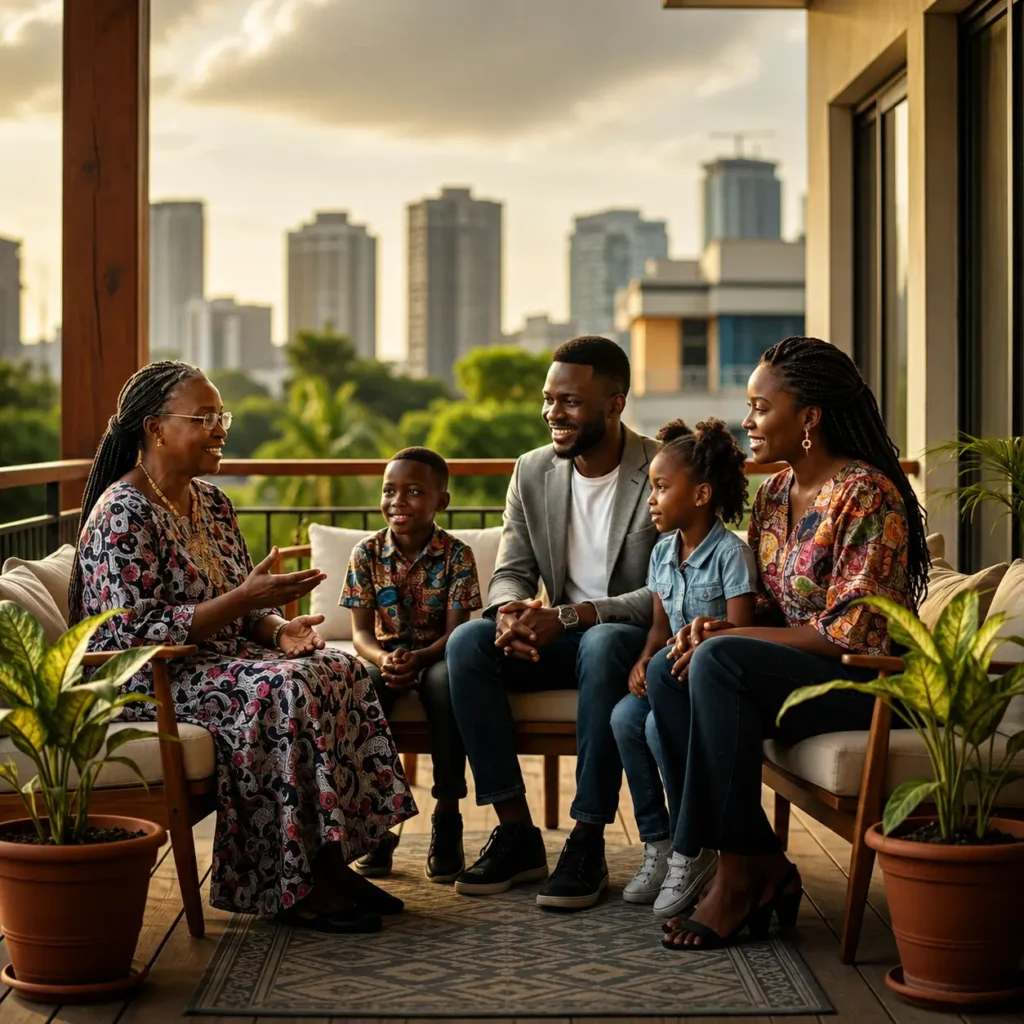
There comes a point in the life of many successful families when the enterprise they have built begins to extend beyond the geography in which it was created.
It rarely happens because someone decides it should. More often, it is the natural consequence of success. A son or daughter leaves for university and builds a career abroad. The business finds customers beyond its domestic market. New investment opportunities emerge across Africa and internationally, while trusted advisers, banking relationships and strategic partnerships gradually become more global than local. None of these developments feels particularly significant in isolation. Yet, over time, they reshape something far more fundamental than the scale of the enterprise. They reshape the geography of the family itself.
The business may still be headquartered in Lagos, Nairobi or Accra, but the family no longer lives, works or makes decisions within the boundaries of a single jurisdiction. One generation remains immersed in the operating business while another builds expertise elsewhere. Conversations that once took place around a single table now span different cities, time zones and regulatory environments. Long before anyone consciously plans for it, the family enterprise has become international.
The structures surrounding it, however, often have not.
For much of the last century, this was hardly a concern. Families generally lived where their businesses operated. Governance assumed proximity. Ownership structures reflected a single legal system, and succession unfolded within broadly the same economic environment that had shaped the previous generation. Those assumptions were so deeply embedded that few people had reason to question them.
Today they deserve to be questioned, not because African families have become more ambitious, but because the world in which those ambitions are pursued has fundamentally changed.
When Geography Becomes a Strategic Question
The relationship between geography and enterprise has been quietly rewritten over the past two decades.
Technology has made it possible to build relationships, manage investments and lead businesses across borders with an ease that previous generations could scarcely have imagined. At the same time, the world has become more complex. Supply chains have been reshaped by geopolitical tensions, governments have strengthened oversight of strategic industries, and cross-border investment increasingly requires navigating different regulatory, tax and compliance regimes.
Paradoxically, just as successful families have become more internationally connected, the environments in which they operate have become more fragmented.
Africa is experiencing this transition in its own way. The African Continental Free Trade Area is encouraging businesses to think regionally rather than nationally, while a globally connected African diaspora continues to influence entrepreneurship, investment and knowledge exchange across continents. Increasingly, success is no longer defined solely by performance within one market, but by the ability to participate confidently across several.
The consequence is subtle, but significant. Families are no longer simply managing businesses across borders. Increasingly, they are stewarding families whose lives, opportunities and aspirations extend across borders as well. That changes the questions they need to ask.
Preparing for Tomorrow’s Geography
Recognising this shift is only the beginning. The more important task is ensuring that the family’s structures evolve alongside the family itself.
For many years, continuity has been built around preserving assets, preparing successors and strengthening governance. Those responsibilities remain fundamental, but they now require a broader perspective. As families become more geographically dispersed, stewardship can no longer focus only on preserving what exists today. It must also prepare the family for circumstances that may not yet exist.
Increasingly, that preparation takes three forms.
Many ownership structures were created when families lived, worked and made decisions within a single jurisdiction. Today’s reality is often very different. Children study abroad, establish careers in different countries and, in many cases, raise families of their own there. Ownership therefore needs to be designed with participation in mind, not simply transfer.
Increasingly, families are reviewing whether their trusts, holding structures, shareholder arrangements and governance documents remain appropriate for a geographically dispersed family. Rather than asking how assets should pass to the next generation, they are asking how future generations will exercise ownership responsibly, collaborate effectively and make decisions together regardless of where they live.
This is one of the reasons the modern family office has evolved beyond investment oversight. Increasingly, its role is to coordinate the legal, governance, tax and family considerations that allow ownership to remain effective across generations and across jurisdictions.
Distance has a way of weakening participation unless families become intentional about maintaining it.
Many of the strongest family enterprises now treat governance as an ongoing process rather than an annual meeting. Family councils, ownership forums, next-generation education programmes and regular decision-making rhythms help ensure that children studying or working abroad remain connected to the family’s purpose, not simply its assets.
This is also changing the way succession is approached. Preparing successors is no longer only about identifying the next chief executive or chairperson. It increasingly involves creating pathways for different members of the family to contribute according to their skills, interests and location. Leadership becomes less about proximity to the business and more about commitment to the family’s long-term vision.
Capital is no longer simply a resource to preserve. It has become a tool for expanding the family’s future options.
Increasingly, families are asking whether today’s investment decisions create flexibility for tomorrow. Should part of the portfolio be invested internationally? How should liquidity be managed if opportunities arise across multiple jurisdictions? How can private investments, operating businesses and strategic acquisitions be coordinated to support the family’s long-term objectives rather than individual transactions?
This is where a Private Investment Office becomes increasingly valuable. Rather than evaluating investments in isolation, it helps families think about capital as part of a broader strategy—aligning investment decisions with ownership, governance, succession and the family’s longer-term ambitions.
Taken together, these shifts point towards a broader capability. We have come to think of that capability as Mobility Capital.
It is not another asset on a family’s balance sheet, nor is it simply about international mobility. It is the ability to ensure that ownership, governance and capital evolve as the family’s geography evolves. It is what allows continuity to endure even when the family no longer lives, works or creates opportunity in the same place.
Perhaps this is where the conversation about family enterprise begins to change. The question is no longer simply whether families will transfer wealth successfully from one generation to the next. It is whether they are deliberately building a family enterprise capable of adapting to the world the next generation is likely to inherit.Because stewardship has never been about preserving yesterday’s structures. It has always been about preparing tomorrow’s family.
Ultimately, continuity is not created by strong investments or sound legal structures in isolation. It emerges when ownership, governance, capital and the family itself are designed to evolve together.