African family offices are increasingly prioritizing governance, ownership structure and continuity before investment strategy as families transition from founder-led wealth to multigenerational stewardship…
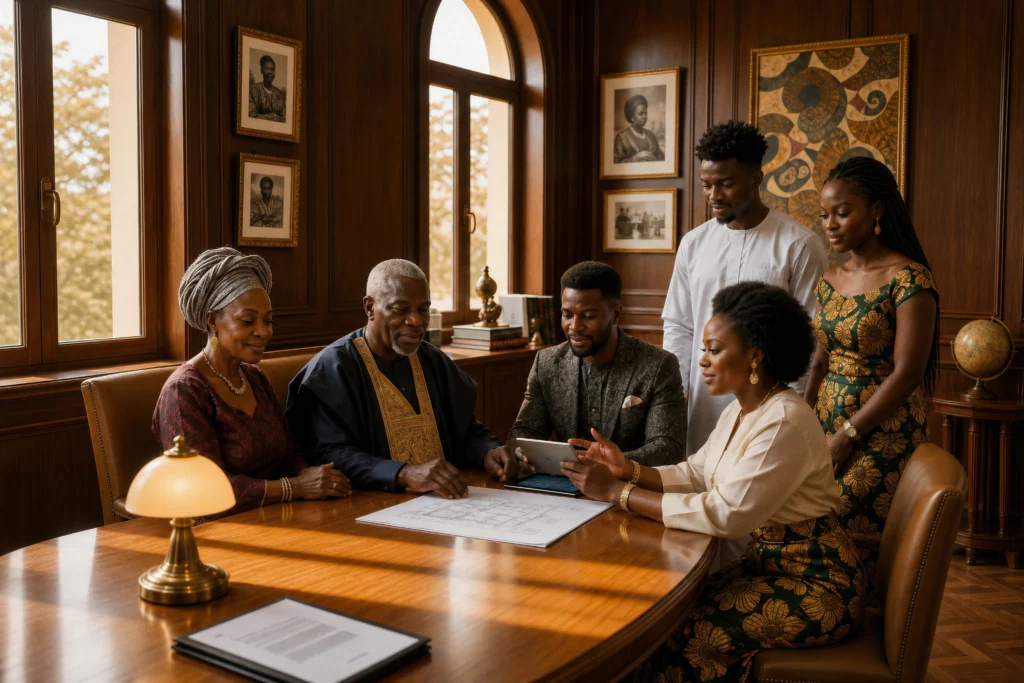
Wealthy families in Africa are increasingly seeking to formalize governance, ownership, and decision-making structures, often through the creation of a family office.
This emerging family office ecosystem, which takes a strategic, long-term approach to managing family capital, is “distinctly African,” says Olufunke Olumide, a partner at The Legacy Haus Multifamily office, which is part of Acuity Partners in Nigeria.
“The African model starts with structure, and then they build investments around it,” Olufunke says. “In many developed markets, family offices are built around investment management and portfolio optimization. In the African context, we have found that families are first focused on ownership, establishing governance, and continuity.”
Many wealthy families in Africa have built significant portfolios across operating businesses, real estate and global investments, but often without coordinated ownership frameworks, formal governance systems, or clear intergenerational decision-making structures. Over time, this can create growth without continuity, making generational transitions increasingly difficult.
The emerging African family office model aims to solve this problem by prioritizing structure before investment strategy. This would help families align around ownership and other decisions, Olufunke says. In this framework, the family office not only manages investments but also acts as a central coordinating layer – aligning advisors, ownership structures, governance systems and long-term family objectives helping the family move from fragmented decisions to coordinated, long-term thinking.
A focus on structure
As many African families move from first-generation wealth builders to multi-generational stewardship, they are moving from founder-led toward more structured family-led frameworks.
“These next-generation family members are more globally exposed, so they are familiar with many of these frameworks and are beginning to demand them,” Olufunke says. “They are asking deeper questions around structure, governance & continuity. Families are increasingly seeing the need for a centralized decision-making system that helps preserve both the wealth and the long-term vision behind it.”
One of the key concerns for many African families is avoiding an often lengthy or uncertain probate process. While some establish trusts with corporate trustees to address this, Olufunke says, those trusts are often designed around capital preservation or growth without fully addressing broader questions of governance, continuity and family coordination.
“Families are beginning to recognize a structural gap. Protection is a major priority for many African families seeking family office services,” Olufunke says. “Once that protection is in place, they can begin building structures around continuity, and family coordination.”
The Legacy Haus often guides families toward creating a family-controlled system that is centered on a personalized trust and ownership structures that bring together multiple entities serving different functions including family investment companies, private foundations, holding structures, and other governance vehicles around the family’s long-term objectives.
The aim, Olufunke says, is to create a family-controlled system that aligns ownership, governance, and investment activity within one coordinated framework.
Overcoming challenges
Creating these structures, however, comes with challenges
“The first challenge is the perception of the loss of control”, Olufunke says. Many family principals worry that when these structures are in place, they will lose control over decision making or movement of capital,” Olufunke says. “What we explain is that they are not losing control. They are creating governance mechanisms and ownership structures that allow the family to operate with greater clarity and continuity.”
Families who already work with multiple advisors may also struggle to coordinate them within a unified structure. In addition, governance often becomes more complex when assets are spread across multiple jurisdictions.
“Many families already have an idea of setting up structures in Dubai or Mauritius, ” Olufunke says. “But the jurisdiction where the majority of the assets are actually located should remain central to how the structure is designed. The framework has to reflect both the local realities of the assets and the family’s broader global outlook”.
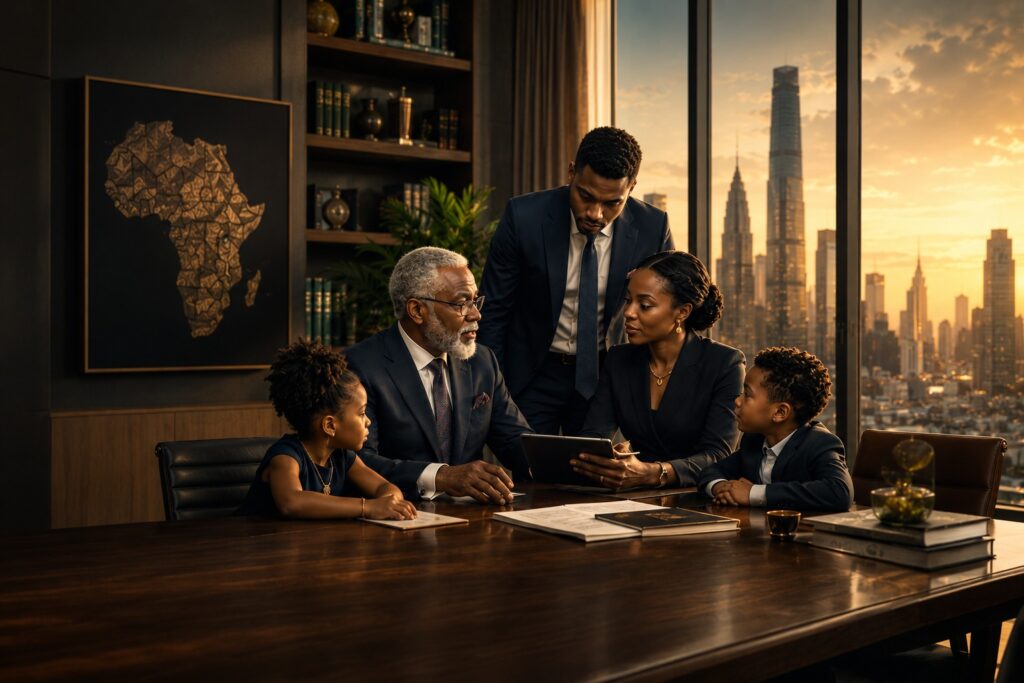
Family education also plays a critical role in helping these structures succeed. Families with an operating business typically get the next generation involved through internships or operational exposure. Those who don’t have operating businesses may create intentional forums for engagement through family meetings, governance sessions, or external development programs focused on financial literacy or emotional intelligence.
“Because wealth exists within a family structure, it is not really about ‘giving’ the next generation wealth,” Olufunke says. “It is about gradually involving them in the stewardship and growth of that collective family system.”
Olufunke believes the governance systems African families are now building are, in many ways, a modern extension of long-standing communal traditions across the continent.
“In Africa, wealth creation historically happened within the family system,” Olufunke says. “But with increasing global exposure, ownership became more fragmented across individuals and jurisdictions. What we are now seeing is a deliberate move toward structures that can bring those fragmented assets back into a coordinated system. Families are beginning to focus not just on wealth creation, but on how that wealth is structured to endure.”
Published on the Family Office Professional – 21st May 2026