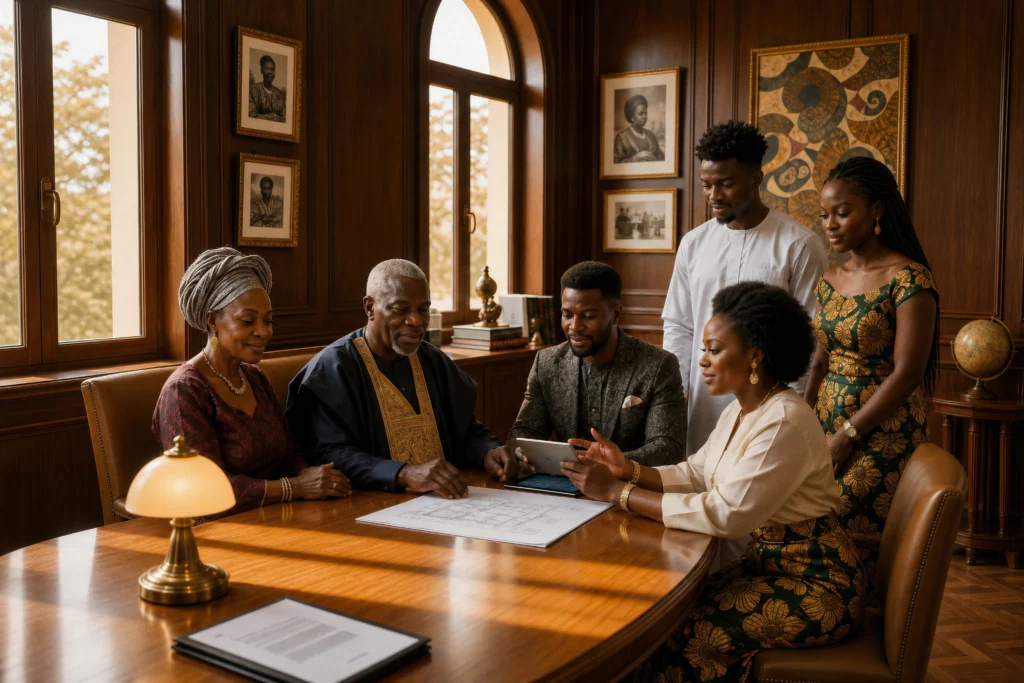

Love is many things and often spoken about in emotional terms like affection, sacrifice, partnership and shared history.
But families who endure understand something else: Love is also structure.
When responsibility grows, intention must follow. When assets accumulate, so must clarity. And when families think beyond the present, they do not rely on assumptions but design frameworks.
This is where a family trust comes in.
A family trust is a quiet statement that says:
I have thought this through. I have made provision. I have reduced the room for chaos.
It is private architecture designed to hold assets, responsibility, and intent together across time.
What a Family Trust Represents
At its essence, a family trust is a deliberate structure through which families hold, manage, and transfer assets with continuity and purpose.
It creates an ordered relationship between:
- the individual who defines the intent,
- those responsible for administering it, and
- those meant to benefit-now and in the future.
Assets placed within a trust are no longer exposed to the fragility of personal circumstance alone. They are held within a defined framework that separates ownership, decision-making, and enjoyment. This is simply to create stability.
This separation is what allows a trust to endure.
It is what allows it to adapt.
And it is what allows families to plan with confidence.
Unlike arrangements that only take effect at death, a trust can operate during one’s lifetime, evolving as family dynamics, businesses, and priorities change, while remaining anchored to a clearly articulated intent contained in your trust deed and other family governance documents.
Why this is a structure for you
Many people assume trusts are only relevant once a certain financial threshold is reached. That assumption misses the point. Families who think long-term understand that complexity does not begin at scale. It begins the moment responsibility extends beyond one person. So if you own assets—real estate, shares, a business, intellectual property, or even capital you want carefully managed, then you already have something worth structuring.
How is this beneficial
- It protects what you have built
Life is unpredictable. Businesses face cycles. Personal circumstances change. Exposures arise in unexpected ways.
Assets held within a properly designed trust sit within a protected perimeter. Shares, properties, and investments are structured deliberately and shielded from unnecessary personal risk and positioned for continuity.
- It creates clarity when emotions are high
Periods of loss, transition, or incapacity are rarely neutral. Even the closest families can struggle when emotion and responsibility intersect.
A trust replaces ambiguity with direction. It defines who benefits, how decisions are made, and under what conditions assets are applied.
Instead of leaving interpretation to circumstance, it leaves instruction, creates momentum and ensures order.
The result is not only administrative efficiency, but emotional relief for those left to carry on.
- It allows you to provide with precision
Love is sometimes about giving wisely, and not always about giving everything at once. Outright distributions are simple but life rarely is.
A trust allows you to be deliberate:
- Capital can be released at defined stages of life
- Funds can be applied to education, health, enterprise, or specific objectives
- Decision-making principles can be clearly articulated
Sometimes, love means giving gradually and protecting people from decisions they are not yet ready to make.
- It helps you plan for incapacity
There may come a time when you are alive but unable to manage your affairs whether temporarily or otherwise.
When assets are held personally, this often intrusive and slow processes.
Where assets are held within a trust, administration continues quietly, in line with pre-agreed direction. The structure does not pause. The intent remains intact. Continuity is preserved.
- It preserves family wealth across generations
Without structure, assets fragment. They are divided, consumed, and often lost within a generation or two.
A trust allows families to think beyond immediate benefit. It enables assets to be held across generations, guided by values, governance, and long-term purpose.
Over time, the structure becomes more than a repository of assets. It becomes a framework for identity encouraging responsibility, enterprise, and continuity.
What matters in practice
A trust is only as effective as its design and execution.
- Assets must be properly transferred into the structure. A trust without assets is only an idea.
- The trust deed must be precise. Ambiguity is costly.
- The structure must reflect your objectives. There is no one-size-fits-all approach.
This is architecture, not just a template as it must be tailored to your family’s needs.
Why this is Ultimately about Love
Most people avoid conversations about mortality, incapacity, or conflict. But families who
endure understand that love is practical.
Love plans, anticipates and structures.
Creating a family trust is not pessimistic. It is responsible. It replaces uncertainty with intention and leaves those you care about with clarity rather than questions.
Love without structure can be chaotic. Structure without love can feel hollow.
A well-designed family trust brings both together.
Our Approach
At The Legacy Haus, we work with families to design private trust structures that reflect intent, preserve continuity, and respect the realities of African families operating in a global context.
Our role is not to impose templates, but to help translate responsibility into structure quietly, deliberately, and with the future in mind.
Book a private consultation to explore what structure could look like for your family.
Author: Eniola Alle
Senior Private Client Advisor