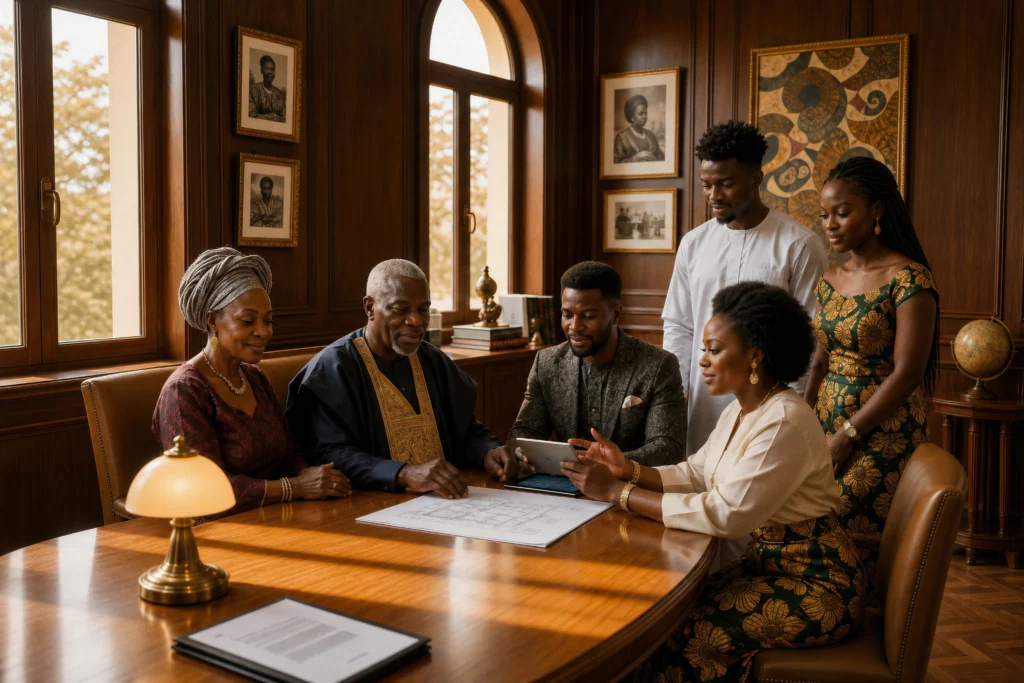

It’s not just about age. What looks like resistance is often a rising generation trying to show up – differently.
We were mid-call with a client – a founder in his 60s and his daughter in her 30s. He built one of the largest local logistics companies in West Africa. She just left a strategy role in London.
He wants her involved.
She wants to be useful – but not boxed in.
The call ends with a smile, but everyone knows there’s tension.
This is what we call the generational gap, and no, it’s not just about age. It’s about vision, voice, and the structure needed to carry both forward.
The Unspoken Tension in Many Family Enterprises
If you’re part of a family business or legacy family, this might feel familiar:
- Your parents or uncles built something incredible from the ground up.
- Now you’re back – or ready- to engage, but you’re seeing cracks in the foundation.
- You’re asking different questions: What’s our long-term strategy? Shouldn’t we explore tech? What about ESG, succession, philanthropy?
- And sometimes the answers are: “We’ll get to it,” “Not now,” or just silence.
Meanwhile, founders are wondering:
Will they change everything? Do they even value what we’ve built? Are they ready to lead?
Here’s the truth: what is being classified as rebellion is the rising generation trying to be responsible – just differently.
Why This Gap Keeps Showing Up
1. Different Seasons, Different Stories
Founders often built wealth in survival mode. Speed, control, and caution were necessary. The rising generation is educated, global, impact-driven, and less afraid of failure.
They want evolution, not just preservation. But when that shift isn’t acknowledged, it creates a silent war.
2. Cultural Silence
In many African families, questioning elders is taboo. But what happens when questions are urgent—about governance, transparency, or succession? Without structured dialogue, silence becomes risk.
3. No Formal Onboarding
In most African businesses, leadership isn’t passed down – it’s handed over, suddenly.
There’s no orientation manual, no phased transition, no collaborative vision workshop, just “Figure it out.”
But there’s a need for Alignment
You don’t build generational wealth with good intentions and family WhatsApp groups. You need shared vision, structure, and deliberate engagement.
- Alignment builds business resilience – When everyone’s clear on the mission, strategy shifts don’t shake the legacy.
- It Unlocks Impact – Many in the rising generation care about purpose-driven initiatives – philanthropy, sustainability, innovation. With alignment, these passions strengthen the family brand.
- It Protects Relationships – Without alignment, business decisions become personal attacks. With structure, it becomes dialogue – not drama.
What We Recommend (from experience)
We’ve walked side-by-side with families across Africa doing this well – and here’s what we have seen work:
1. Don’t wait for a crisis
Start now—with a family strategy session or just honest, facilitated conversation. Not just about the business, but about what matters. Ask: What do we want to be known for in 30 years?
2. Build trust with trust
Introduce rising generation members to real responsibilities – start with philanthropy, investment committees, or family boards. Use education trusts or tiered access frameworks that teach stewardship, not entitlement.
3. Formalise engagement
Host retreats. Write the family vision. Draft (or refresh) the constitution. Make it real, not ceremonial. Put names, dates, and expectations down in writing.
4. Speak in both directions
Founders – explain your journey, fears, hopes.
Rising generation – bring your ideas respectfully, but clearly. A family office advisor often helps translate the unspoken.
Final Thoughts
If you’re a founder – don’t just hope your children will carry the torch. Design the handover.
If you’re part of the rising generation – don’t just wait your turn. Earn trust. Start conversations. We say this all the time at AP: Wealth may be inherited but legacy must be designed. And alignment is how you do it.